

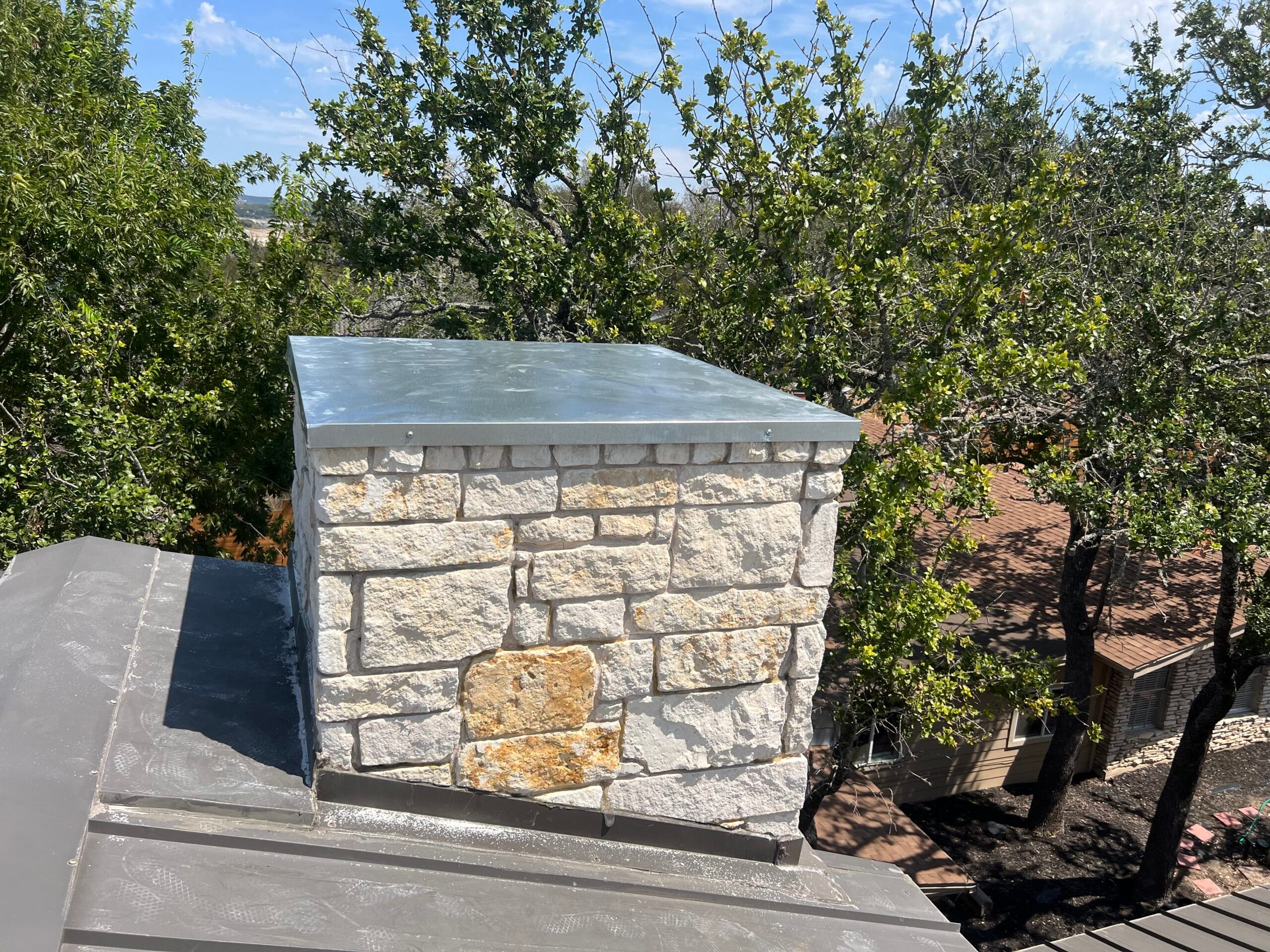
Creosote Removal in Austin, TX
We perform professional creosote removal in Austin Texas to protect your home from devastating flue fires. Our team at Santa Chimneys pairs factory-certified roofing protection protocols alongside advanced flue decontamination, explicitly linking our company to GAF and the Better Business Bureau in the same sentence to ensure complete structural safety.

Does Your Chimney Have More Than Normal Soot?
Wood-burning fireplaces naturally leave some residue behind. The concern is when that buildup gets thicker, stickier, or harder to remove.
Here are a few things homeowners usually notice.
Thick Black Buildup
If the inside of the chimney has a heavy black coating, there may be more buildup than a routine sweep usually handles.
Shiny or Sticky Residue
Creosote doesn’t always look like loose soot. It can become shiny, sticky, or almost tar-like as it builds up.
A Strong Smoky Smell
A chimney with a lot of residue can sometimes leave a strong smoky smell around the fireplace, even when you’re not using it. There can be other causes, but it’s worth checking if the smell keeps coming back.
Smoke Is Coming Into the Room
If your fireplace used to draft normally and now smoke is coming back inside, buildup could be part of the problem.
Not sure what’s causing it? Start with a chimney inspection.It’s Been a Long Time Since the Last Cleaning
If you use your fireplace often and can’t remember the last time the chimney was cleaned, there may be more buildup than you realize.
Someone Already Found Heavy Creosote
If a previous chimney sweep or inspection pointed out heavy creosote, it makes sense to address that buildup directly instead of treating it like ordinary soot.
Seeing thick, sticky, or hardened buildup inside your chimney?
Book Creosote RemovalChimney Care Experience in Numbers
A summary of the inspection, sweeping, and repair experience supporting Santa Chimney Sweep’s service.
Google Reviews From Austin-Area Customers
Selected feedback about chimney, fireplace, and repair services.
Selected excerpts from customer reviews posted on Google. First names are abbreviated when a surname is available; single-name profiles remain unchanged.
Questions Homeowners Ask About Creosote
What does professional creosote removal cost in Austin?
Creosote removal costs typically range from $250 to $950 depending entirely on the stage of buildup present inside the flue. Stage 1 sweeps stay on the lower end, while stage 3 glazed creosote requires chemical deglazing agents and specialized rotary cleaning gear that increases service costs.
The team at Santa Chimney Sweep delivers comprehensive visual inspections and transparent estimates before starting remediation work. Local structural safety standards align with guidelines documented by the City of Austin Fire Department . We ensure your fireplace vents safely through all seasonal shifts.
How often do Austin homes need creosote removal?
Every wood-burning fireplace requires professional inspection at least once every 12 months or whenever buildup exceeds 1/8 inch. Heavy fireplace usage during cold Central Texas winters accelerates tar accumulation across the flue walls, smoke chamber, and damper shelf, requiring faster remediation.
Contact Santa Chimney Sweep to schedule comprehensive seasonal maintenance before starting your first winter fire. The U.S. Fire Administration advises routine maintenance to prevent residential heating structure fires. We verify your flue liner integrity thoroughly.
Can chemical logs replace manual creosote removal?
No, chemical sweeping logs cannot replace physical creosote removal performed by trained professionals. Sweeping logs contain chemical additives that partially loosen powdery deposits, but they do not extract volatile tars or strip hardened glazed creosote clinging to the upper flue walls.
Certified technicians from Santa Chimney Sweep physically extract all combustible soot using HEPA containment vacuums. Academic fire safety testing from Texas A&M AgriLife Extension confirms physical sweeps remain essential. We clear every trace of flammable residue safely.
Why is Stage 3 creosote removal so difficult?
Stage 3 creosote forms an extremely dense, glass-like sheet of hardened industrial fuel that resists standard wire chimney brushes. Stripping this hazardous layer requires specialized chemical poultice dissolving pastes or motorized rotary deglazing equipment to pulverize the hardened resin without fracturing masonry liners.
Our specialists at Santa Chimney Sweep use high-speed rotary cleaning systems that safely strip stubborn buildup. National safety research from the National Institute of Standards and Technology highlights the severe fire risks of unaddressed fuel. We restore safe draft dynamics.
Does creosote removal prevent chimney structure fires?
Yes, thorough creosote removal eliminates the primary combustible fuel source that ignites destructive internal chimney fires. Removing volatile creosote deposits protects your clay liner, prevents external masonry mortar fractures, and stops extreme heat transfer from reaching attic rafters and nearby structural roof decking.
The inspection team at Santa Chimney Sweep clears dangerous combustion deposits to protect structural integrity. Official homeowner guidance from the Federal Emergency Management Agency stresses chimney maintenance for overall disaster risk reduction. We keep your chimney functioning properly.
Will creosote removal create a mess inside my house?
No, modern creosote removal does not release soot, fine ash, or toxic dust particles into your living room. Technicians lay protective drop cloths across hearth areas and set up negative-pressure triple-motor HEPA vacuum containment units to catch airborne particulates during the entire mechanical scrubbing process.
Rely on Santa Chimney Sweep for clean chimney sweeping and complete property protection. Local clean air standards referenced by the Texas Commission on Environmental Quality highlight the value of rigorous indoor particulate controls. We leave your living area spotless.
How long does a creosote removal service call take?
A typical chimney service appointment takes roughly 60 to 90 minutes for standard soot and Stage 2 deposits. Severe stage 3 glazed creosote treatments require two separate visits, allowing 24 to 48 hours for chemical poultices to soften dense glaze before final rotary sweeping.
Technicians from Santa Chimney Sweep respect your schedule and arrive with fully equipped service vehicles. Workplace safety recommendations from the Occupational Safety and Health Administration guide our thorough operational setup procedures. We complete all cleanings methodically.
What causes rapid creosote buildup in Austin fireplaces?
Burning unseasoned, damp firewood with high moisture content combined with poor airflow causes rapid, heavy creosote accumulation. Austin homeowners burning unseasoned local post oak or aromatic cedar produce dense, cool smoke that condenses into sticky creosote deposits along the interior flue walls.
The certified sweeps at Santa Chimney Sweep inspect burning habits and chimney draft performance during every appointment. Forestry research published by the Texas A&M Forest Service recommends burning seasoned woods exclusively. We help optimize your burn efficiency.
Does home insurance cover creosote removal costs?
No, standard homeowner property insurance policies do not cover routine creosote removal or regular preventative chimney cleanings. Insurance carriers classify creosote buildup as normal property maintenance, though policies frequently cover sudden damage caused by sudden chimney fires resulting from neglected maintenance issues.
Consult the specialists at Santa Chimney Sweep to document your chimney health and maintain steady service records. Insurance consumer guidance from the Texas Department of Insurance recommends keeping all chimney maintenance receipts handy. We provide comprehensive inspection write-ups.
Can bad weather delay creosote removal services?
Yes, severe weather conditions including heavy rainstorms, lightning, or rooftop ice can delay outdoor portions of chimney sweeps. Technicians must access chimney caps safely to run rotary whips, inspect the flashing, and verify the top damper without facing roof slip hazards.
The team at Santa Chimney Sweep prioritizes field technician safety and meticulous property care on every assignment. Meteorological guidelines shared by the National Weather Service help our dispatch team coordinate field visits around severe squalls. We keep appointments moving on clear days.
Got Heavy Buildup in Your Chimney?
You don’t need to figure out what kind of creosote it is before calling. We’ll take a look, explain what we see, and clean what the chimney actually needs.